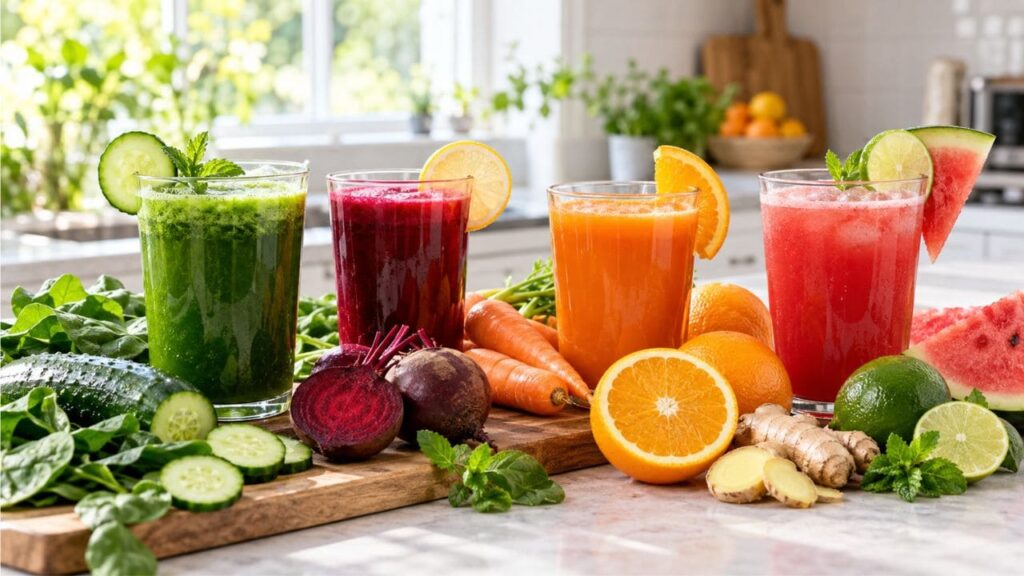

Adding more fruits and vegetables to your diet can be a simple way to increase your intake of vitamins, minerals, water, and other important nutrients. But if your goal is to lose body fat, it’s important to look beyond any single food or drink.
The best healthy juices for fat loss are not miracle drinks. Instead, they can be a convenient way to include more produce in your routine when used as part of an overall balanced eating pattern.
Juice can provide nutrients and hydration, but whole fruits and vegetables should still play an important role in your diet. Whole fruit contains fiber, which can help you feel fuller, while many juices contain little or no fiber. The CDC recommends choosing whole fruit over fruit juice when possible.
Key Takeaways
- Healthy juices for fat loss can add fruits and vegetables to a balanced eating pattern, but they do not directly burn body fat.
- Whole fruits and vegetables generally provide more fiber and fullness than juice.
- Homemade juice makes it easier to control added sugar and ingredients.
- Vegetable-forward recipes can help keep drinks less sweet and more nutrient-focused.
- Portion size still matters because juice contains calories and naturally occurring sugars.
- Sustainable fat loss depends on your overall eating pattern, physical activity, sleep, and other lifestyle habits.
Can Juice Help With Fat Loss?
There is no specific juice that can make your body burn fat on its own. Losing body fat depends on your overall energy balance and eating pattern, along with physical activity and other lifestyle factors.
That doesn’t mean healthy juices for fat loss have no place in a healthy diet.
A homemade vegetable-based drink can be a refreshing alternative to a sugar-sweetened beverage. It can also help you include ingredients such as cucumber, leafy greens, carrots, and tomatoes in your daily routine.
The key is how the juice fits into your overall diet.
For example, replacing a sugar-sweetened soda with an unsweetened homemade juice may be a useful change. Drinking a large glass of fruit juice in addition to your usual meals, however, adds calories without necessarily making you feel as full.
The CDC notes that whole fruits are generally a better choice than fruit juice because whole fruit provides fiber and can help with fullness.
9 Healthy Juice Ideas for Fat Loss
These healthy juices for fat loss are simple homemade options built around vegetables, moderate amounts of fruit, and natural flavor boosters.
The recipes don’t require added sugar. You can also adjust the amount of water depending on whether you prefer a thicker or thinner drink.
1. Green Vegetable Juice
Ingredients:
- 1 cup cucumber, chopped
- 1 cup spinach
- ½ small green apple
- ½ lemon, peeled
- ½-inch piece of fresh ginger
- ½ cup water
How to make it:
Add all the ingredients to a blender and blend until smooth. Add more water if needed. If you prefer a traditional juice texture, strain the mixture after blending.
Why try it:
Cucumber and spinach add water and nutrients, while apple provides natural sweetness. Keeping the apple portion moderate prevents the drink from becoming overly fruit-heavy.
This is one of the most flexible healthy juices for fat loss because you can easily adjust the vegetable-to-fruit ratio to suit your taste.
2. Beetroot and Lemon Juice
Ingredients:
- ½ small beetroot
- ½ cucumber
- ½ lemon
- ½-inch piece of fresh ginger
- ¾ cup water
How to make it:
Blend all the ingredients until smooth. Add more water if necessary and serve fresh.
Why try it:
Beetroot naturally contains dietary nitrates. Research suggests that nitrate intake, including from beetroot juice, may improve some aspects of exercise performance. However, this does not mean beetroot juice causes fat loss.
If you exercise regularly, this can be a refreshing addition to an otherwise balanced eating routine.
3. Orange and Carrot Juice
Ingredients:
- 1 medium orange, peeled
- 1 medium carrot
- ½-inch piece of fresh ginger
- ½ cup water
How to make it:
Blend until smooth and serve immediately.
Why try it:
Oranges provide vitamin C, while carrots contain beta-carotene and other nutrients. The natural sweetness means there is no need to add sugar.
For a more filling option, you can also eat the orange whole and use carrots as part of a meal. Whole produce generally provides more fiber than juice.
4. Carrot and Ginger Juice
Ingredients:
- 2 medium carrots
- ½ cucumber
- ½-inch piece of fresh ginger
- ½ lemon
- ½ cup water
How to make it:
Blend the ingredients until smooth. Add water gradually until you reach your preferred consistency.
Why try it:
Carrots provide natural sweetness, while ginger and lemon add a fresh, slightly spicy flavor.
Among healthy juices for fat loss, this is a practical option for people who prefer a naturally sweet drink without added sugar.
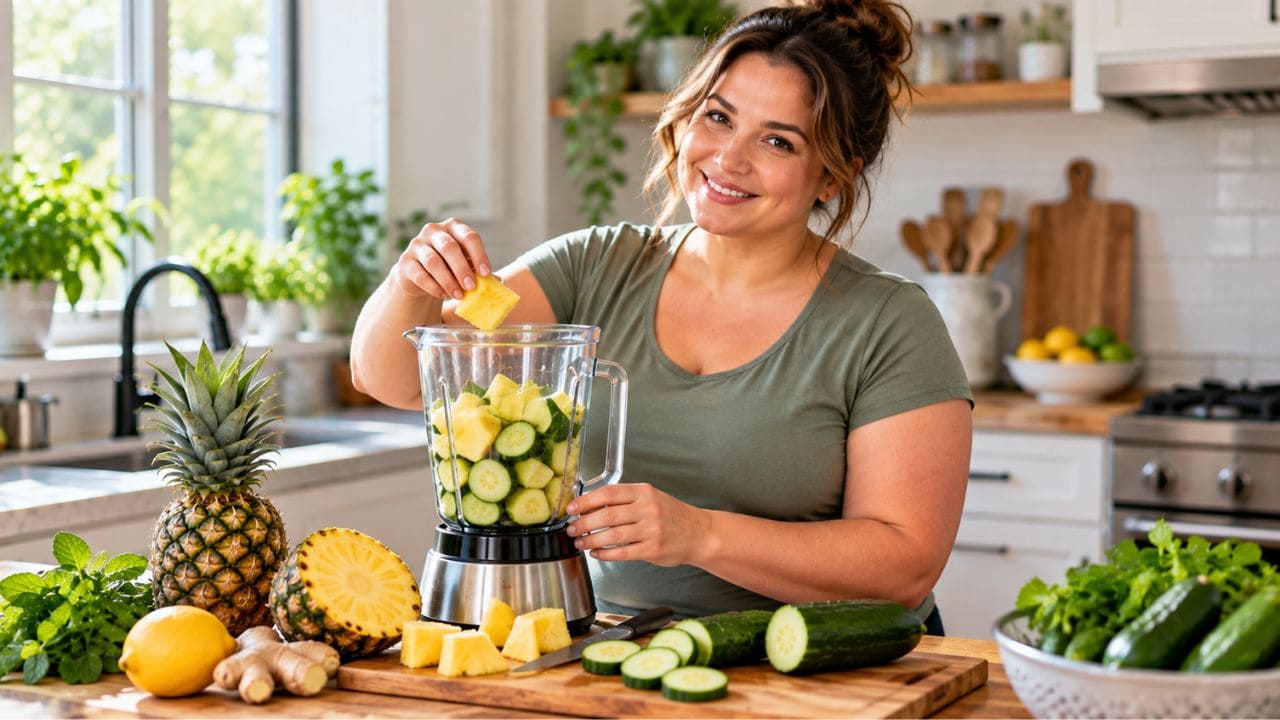
5. Pineapple and Cucumber Juice
Ingredients:
- ½ cup fresh pineapple
- 1 cup cucumber
- ½ lime
- A few fresh mint leaves
- ½ cup water
How to make it:
Blend all the ingredients until smooth. Serve chilled or over ice.
Why try it:
Pineapple provides natural sweetness and a bright flavor, while cucumber adds water and freshness. Keeping the pineapple portion moderate helps prevent the drink from becoming overly fruit-heavy.
6. Watermelon and Lime Juice
Ingredients:
- 1½ cups watermelon cubes
- Juice of ½ lime
- A few fresh mint leaves
- Ice, optional
How to make it:
Blend the watermelon, lime juice, and mint until smooth. Add ice if desired.
Why try it:
Watermelon has a high water content, making it a refreshing choice, especially during warm weather. It also contains naturally occurring sugars, so portion size still matters.
This can be one of the easiest healthy juices for fat loss to prepare when you want a refreshing drink without added sugar.
7. Banana Berry Smoothie
Technically, this is a smoothie rather than a juice. That’s actually useful when fullness is a priority because blending whole ingredients allows you to retain more of their fiber.
Ingredients:
- ½ banana
- ½ cup berries
- ¾ cup plain Greek yogurt
- ½ cup unsweetened milk or fortified soy milk
- Ice, optional
How to make it:
Blend everything until creamy and smooth.
Why try it:
Greek yogurt provides protein, while berries and banana contribute carbohydrates, fiber, and natural sweetness.
Because this recipe contains whole fruit and protein-rich yogurt, it can be more satisfying than a fruit-only juice.
8. Tomato and Vegetable Juice
Ingredients:
- 1 medium tomato
- ½ cucumber
- ¼ bell pepper
- A small handful of spinach
- 1–2 teaspoons lemon juice
- Black pepper, to taste
How to make it:
Blend everything until smooth. Add a little water if necessary.
Why try it:
This savory combination gives you an alternative to sweet juices while including several vegetables in one drink.
If you purchase packaged tomato or vegetable juice, check the Nutrition Facts label for sodium and added ingredients.
9. Green Apple and Celery Juice
Ingredients:
- 1 small green apple
- 1 celery stalk
- ½ cucumber
- ½ lemon
- ½-inch piece of fresh ginger
- ½ cup water
How to make it:
Blend all the ingredients until smooth and serve immediately.
Why try it:
Apple provides natural sweetness, while celery, cucumber, lemon, and ginger create a fresh flavor without added sugar.
For better fullness, enjoy this drink alongside a meal or snack containing protein and fiber instead of using it as a meal replacement.
Simple Juice Formula for Fat Loss
Instead of searching for one “perfect” drink, you can use a simple formula when making healthy juices for fat loss at home:
Vegetables + a moderate amount of fruit + flavor boosters + water
Good vegetable choices include:
- Cucumber
- Spinach
- Celery
- Carrots
- Tomatoes
For natural sweetness, try:
- Apple
- Orange
- Berries
- Pineapple
- Watermelon
For extra flavor, use:
- Lemon
- Lime
- Ginger
- Mint
You don’t need to add sugar, honey, or flavored syrups. Leaving them out makes it easier to control added sugar.
Juice vs. Whole Fruit: Which Is Better?
When comparing healthy juices for fat loss with whole fruit, whole fruit generally has an advantage because it retains its natural fiber.
Fiber can help slow digestion and contribute to feelings of fullness. The CDC specifically recommends choosing whole fruits over fruit juice when possible.
That doesn’t mean you need to avoid juice completely.
A small serving of 100% fruit juice can fit into a healthy eating pattern. However, it should not replace most of the whole fruit and vegetables in your diet.
U.S. dietary guidance recommends that at least half of the recommended amount of fruit come from whole fruit rather than 100% fruit juice.
So, if you’re choosing between eating an orange and drinking orange juice, the whole orange will generally provide more fiber and may be more filling.
Best Time to Drink Juice
There is no special time of day when healthy juices for fat loss suddenly become more effective.
You can enjoy a small serving with breakfast, alongside lunch, or as part of a snack.
What matters more is how the drink fits into your total daily eating pattern.
If you’re hungry soon after drinking juice, consider pairing it with a protein- or fiber-rich food such as plain Greek yogurt, cottage cheese, nuts, or whole fruit.
Common Juice Mistakes to Avoid
A homemade juice can fit into a balanced diet, but a few common mistakes can make it less useful for weight management.
Using Too Much Fruit
Fruit is nutritious, but using several servings of fruit in one drink can increase the amount of natural sugar and calories.
Try making vegetables the main ingredient and using fruit mainly for flavor.
Adding Sugar or Honey
Most homemade juice recipes don’t need added sweeteners.
If the drink tastes too bitter, try lemon, lime, mint, or a moderate amount of fruit instead.
Replacing Complete Meals With Juice
Juice does not automatically provide enough protein, fiber, healthy fats, and other nutrients to replace a balanced meal.
Using healthy juices for fat loss as part of your eating pattern is very different from following an all-juice diet.
Drinking Large Portions
Even nutrient-rich foods and drinks contain calories.
A large glass of juice can contain more calories than you might expect, especially when several servings of fruit are used.
Keep your portion reasonable and consider the drink as part of your overall daily intake.
Choosing Sweetened Juice Drinks
Not every beverage labeled “juice” is 100% juice.
Some fruit drinks contain added sugar or other sweeteners. Check the ingredient list and Nutrition Facts label before buying packaged products.
The CDC recommends limiting sugar-sweetened beverages and choosing healthier options.
How to Make Juice More Filling
One limitation of juice is that it may not keep you full for very long, especially when most of the drink comes from fruit.
If fullness is important to you, consider making a smoothie instead.
You can blend whole fruit and vegetables with:
- Plain Greek yogurt
- Unsweetened milk
- Fortified soy milk
- Chia seeds
- Ground flaxseed
- A small amount of nut butter
These additions can provide protein, fiber, or healthy fats.
Another option is to enjoy a small serving of juice alongside a balanced meal rather than drinking it on its own.
How to Include Juice in a Fat-Loss Diet
The most practical way to use healthy juices for fat loss is to treat them as one small part of your overall eating pattern.
Start with a recipe you genuinely enjoy. You don’t need to drink a different juice every day.
Build most of your meals around nutrient-dense foods such as vegetables, whole fruits, lean proteins, whole grains, beans, legumes, nuts, seeds, and other minimally processed foods.
You can also use juice as a replacement for sugary beverages rather than simply adding it to everything else you already eat.
For example, replacing a regular soda with water or a modest serving of unsweetened homemade juice may be more useful than adding juice on top of your usual drinks.
Healthy weight management is about more than food. Regular physical activity, enough sleep, and other sustainable lifestyle habits also matter.
Eat More Whole Foods
Although healthy juices for fat loss can be convenient, they shouldn’t push whole foods out of your diet.
Try keeping fresh or frozen fruit available for snacks, adding vegetables to lunch and dinner, and including a source of protein with your main meals.
For example:
Breakfast:
Greek yogurt with berries and eggs
Lunch:
Chicken or lentil bowl with vegetables and a whole grain
Snack:
A small serving of homemade juice with a few nuts
Dinner:
Fish, chicken, tofu, or beans with vegetables and a whole grain
This approach gives you a wider variety of nutrients than relying on juice alone.
Conclusion
Healthy juices for fat loss can be a refreshing way to add more produce to your routine, but they aren’t a shortcut to losing body fat.
A better approach is to choose homemade drinks with plenty of vegetables, moderate amounts of fruit, and no added sugar. Keep portions reasonable, and continue eating whole fruits and vegetables so you get the fiber that juice may lack.
Most importantly, look at your entire routine rather than one drink. Balanced meals, an appropriate calorie intake, regular physical activity, sufficient sleep, and habits you can maintain over time will have a much greater impact on sustainable fat loss.
FAQ
1. What are the best healthy juices for fat loss?
Vegetable-forward homemade juices are a practical choice because they can provide nutrients without relying heavily on fruit. Green vegetable juice, cucumber-based combinations, and tomato vegetable juice are good options to consider.
2. Can healthy juices for fat loss burn belly fat?
No. There is no specific juice that selectively burns belly fat. Reducing body fat requires an overall approach that supports an appropriate calorie balance over time.
3. Is fruit juice good for weight loss?
100% fruit juice can provide nutrients, but it generally contains less fiber than whole fruit. For that reason, whole fruit is usually the better everyday choice when possible.
4. How much juice should I drink for fat loss?
There is no universal amount that guarantees fat loss. A modest serving can fit into a balanced eating pattern, but the total amount of food and beverages you consume throughout the day matters more.
5. Are smoothies better than juice for fat loss?
Not automatically, but smoothies made with whole fruits and vegetables can retain more fiber than strained juice. Adding Greek yogurt, fortified soy milk, seeds, or another protein source can also make a smoothie more filling.
Note: If you have diabetes, kidney disease, take medications that affect blood sugar or potassium, or have another condition requiring dietary restrictions, speak with your healthcare professional before making significant changes to your diet.